
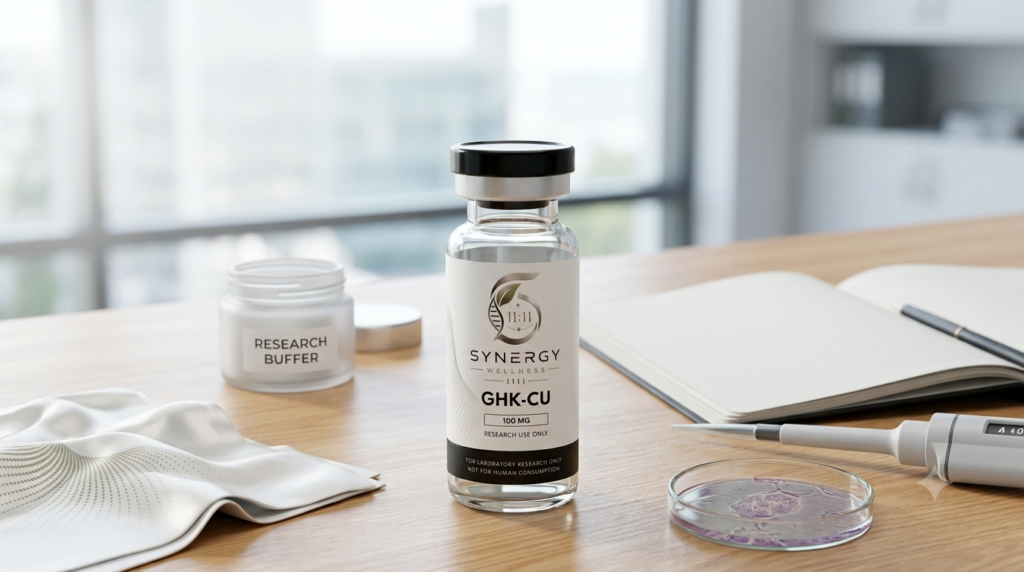
GHK-Cu, also known as glycyl-L-histidyl-L-lysine copper, is a naturally occurring copper-binding peptide that has attracted scientific interest because of its interactions with copper and several cellular pathways. Researchers have investigated GHK-Cu in areas including tissue repair, extracellular matrix biology, inflammation, and cellular signaling.
As research into peptide biology continues, GHK-Cu remains an interesting molecule for laboratory investigation.
What Is GHK-Cu?
GHK-Cu is a complex formed between the naturally occurring tripeptide glycyl-L-histidyl-L-lysine (GHK) and copper ions.
Researchers have studied this peptide-copper complex for its potential interactions with biological processes involving extracellular matrix components, cellular signaling, oxidative processes, and tissue remodeling.
Its copper-binding properties are an important part of its scientific interest.
GHK-Cu and Cellular Research
Research has investigated GHK-Cu in connection with cellular processes involved in tissue remodeling and repair.
Laboratory studies have examined its interactions with fibroblast activity, extracellular matrix components, and signaling pathways associated with tissue structure. These investigations provide researchers with opportunities to study how copper-binding peptides interact with cellular environments.
GHK-Cu and Collagen Research
One area of scientific investigation involves the relationship between GHK-Cu and collagen-related pathways.
Researchers have examined whether GHK-Cu may influence fibroblast activity and the expression or production of extracellular matrix components, including collagen.
These findings have made GHK-Cu a subject of interest in research involving extracellular matrix biology and tissue remodeling.
GHK-Cu and Elastin Research
Scientists have also investigated GHK-Cu in relation to elastin and other structural proteins.
Because collagen and elastin are important components of the extracellular matrix, studying their regulation can help researchers better understand the mechanisms involved in tissue structure and remodeling.
GHK-Cu and Wound-Healing Research
Another research area involving GHK-Cu is tissue repair.
Preclinical research has investigated the peptide’s potential interactions with cellular migration, extracellular matrix remodeling, and processes associated with tissue recovery.
Researchers have also examined pathways involving angiogenesis, or the formation of new blood vessels, as part of broader investigations into tissue-repair mechanisms.
GHK-Cu and Inflammation Research
GHK-Cu has also been studied in relation to inflammatory and oxidative pathways.
Laboratory research has explored how copper-binding peptides may interact with cellular signaling associated with inflammation and oxidative stress. Understanding these mechanisms may help researchers investigate the relationship between peptide signaling and tissue biology.
GHK-Cu and Hair-Follicle Research
Hair-follicle biology is another area where GHK-Cu has been investigated.
Research has explored interactions between GHK-Cu and cellular processes associated with follicular biology, dermal cells, and tissue signaling around hair follicles.
These studies provide a basis for further laboratory investigation into how peptide signaling may interact with follicular cellular pathways.
Why GHK-Cu Is Important in Peptide Research
GHK-Cu provides researchers with an opportunity to investigate several interconnected biological mechanisms, including:
- Copper-peptide interactions
- Extracellular matrix biology
- Collagen and elastin research
- Cellular signaling
- Tissue-remodeling pathways
- Inflammatory signaling
- Oxidative stress research
- Angiogenesis research
- Hair-follicle cellular biology
Further research is needed to fully understand the mechanisms and biological activity associated with GHK-Cu.